
The Non-Techie’s Guide to AI: Why Your ‘Dumb Questions’ Are Your Superpower
By Aamir Qutub
If you’re feeling overwhelmed by all the AI buzz, you’re not alone. I speak with brilliant leaders every week who confess they feel “behind” or wonder if AI is just another tech trend they need to pretend to understand. Here’s the truth: that confusion you’re feeling? It’s completely normal. The real question isn’t whether you’re tech-savvy enough—it’s how can you make AI work for you, starting today?
Let’s bust a myth right now: AI isn’t just for tech experts or Silicon Valley startups. It’s already helping leaders streamline their businesses, reclaim hours in their week, and make smarter decisions. At Dumb Monkey AI Academy, we see this transformation daily—professionals who thought they were ‘too far behind’ becoming AI champions in weeks, not years. The technology that seems intimidating is actually designed to support you, not replace you. Think of AI as your most capable assistant—one that never sleeps, never judges your “silly” questions, and learns exactly how you like things done.
So how do you actually get started? Here’s your practical roadmap:
Start with your pain points. Where do you lose time? What tasks make you groan? Maybe it’s drafting emails, scheduling meetings, or analysing customer feedback. There’s likely an AI tool that can help.
Try user-friendly tools first. Begin with something simple—AI writing assistants for content creation, automated scheduling tools, or smart CRMs that predict customer needs. You don’t need to understand how they work, just how they help.
Focus on frameworks, not features. Instead of chasing every new app, understand the principles: AI excels at pattern recognition, automation, and processing large amounts of information. Once you grasp this, you’ll spot opportunities everywhere.
Ask those ‘dumb questions.’ In our Academy, the most successful learners are those who aren’t afraid to ask “Wait, but how does this actually help me?” Those questions lead to the biggest breakthroughs.
Here’s what I’ve learnt: progress happens faster in community. When professionals support each other through the learning curve, everyone accelerates. Whether it’s a WhatsApp group of fellow founders or structured mentorship, having people to celebrate small wins and troubleshoot challenges with makes all the difference. Remember, you’re not aiming for perfection—you’re building confidence through practice.
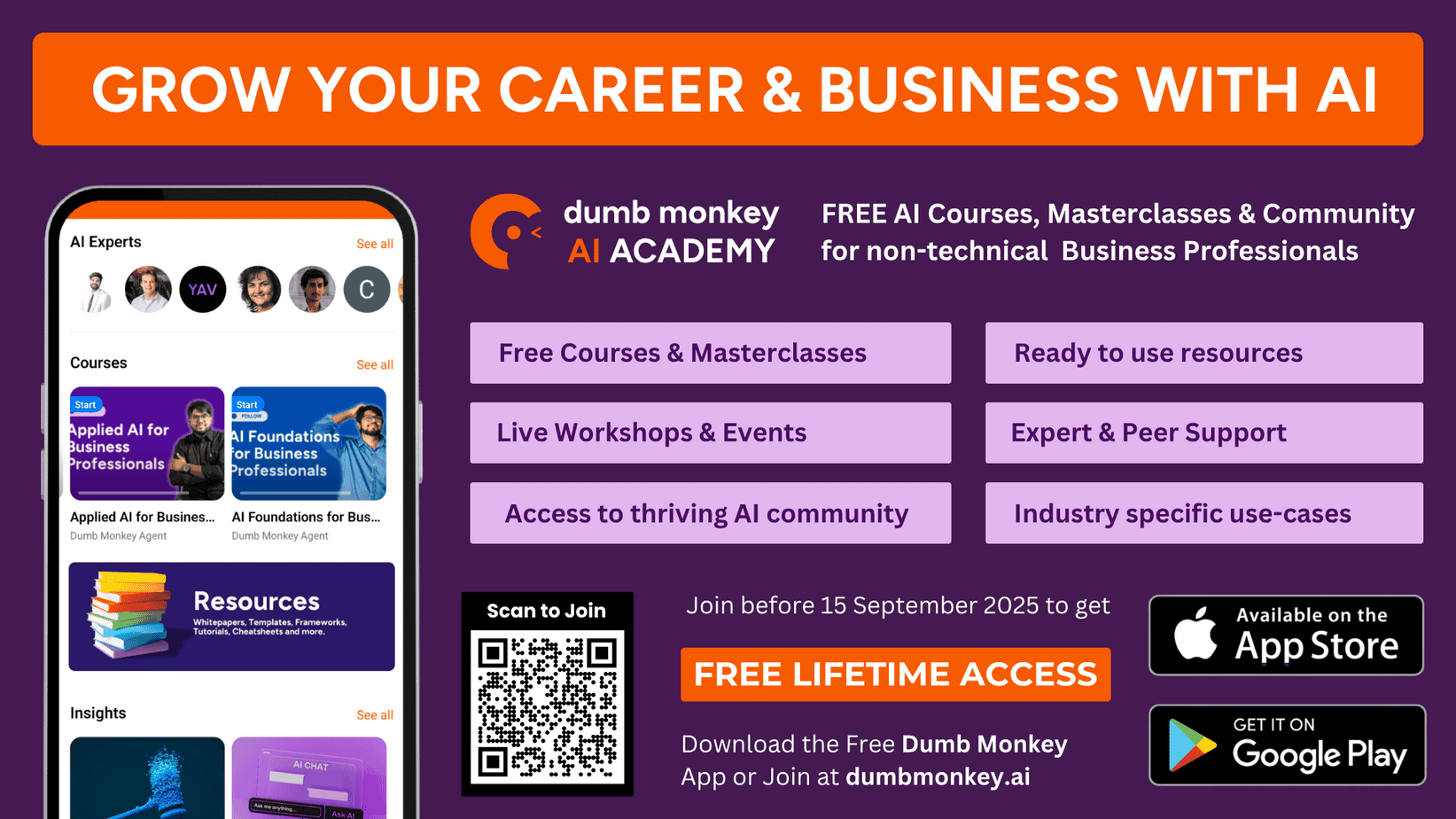
That’s exactly why Dumb Monkey AI Academy exists—a welcoming space where busy professionals learn practical AI skills without the overwhelm.
Through free masterclasses, community Q&As, and step-by-step guidance, we’re helping leaders like you discover how AI can amplify your strengths. No buzzwords, no judgment—just real skills you can apply immediately.
Don’t let confusion hold you back. The future belongs to those willing to learn, lead, and lift each other up. Your ‘dumb questions’ today are your competitive advantage tomorrow.
Ready to Start Your AI Journey?
➡️ Demystify AI—practical, jargon-free training for busy professionals
➡️ Free courses and masterclasses tailored for business, not just techies
➡️ Discover proven frameworks and tools you can use today
➡️ Access real-world case studies and a supportive learning community
➡️ Start for free and see how AI can work for you—not replace you
Case Study 1: Finance Manager Transforms Reporting
A finance manager at a large insurance firm was working weekends to prepare monthly board reports, spending 6 hours manually compiling data and creating visualisations. Initially intimidated by AI, she started with a simple data visualisation tool that connects directly to existing systems. The transformation was immediate—reports that previously took 6 hours now auto-generate in 20 minutes. The automated insights are clearer and more comprehensive than manual versions. This freed her from spreadsheet drudgery to focus on strategic analysis and recommendations. Her CEO noticed the improvement in both speed and quality, whilst she regained work-life balance and elevated her role from data compiler to strategic adviser.
Case Study 2: Marketing Manager Revolutionises Content Creation
A marketing manager at a mid-sized professional services firm was struggling with content creation across multiple platforms. Brainstorming, writing, and scheduling content for five different channels consumed three full days each week, leaving little time for strategy. Sceptical that AI would sound robotic, she tested an AI writing assistant for LinkedIn posts and email campaigns. The tool learnt her voice and brand tone, reducing content creation from three days to three hours weekly. With more time for strategic thinking, her engagement rates increased 40%. She transformed from a stressed content creator into a strategic marketing leader who could focus on messaging that truly resonated with clients.